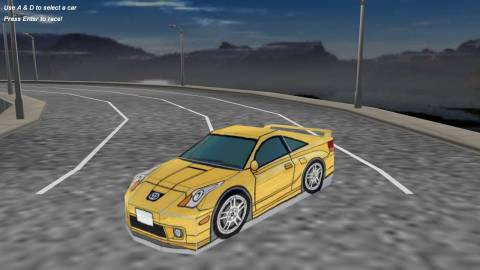
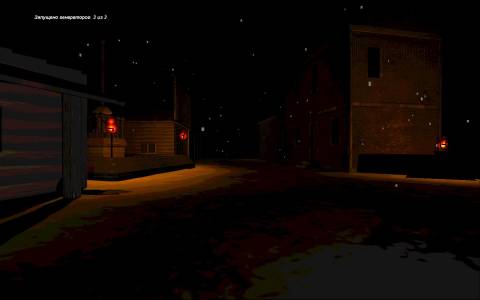
If you are interested, here's the basic reason it looks like that.
Normally to calculate specular falloff you use a power series, like:
specular falloff = power((reflectvector dot viewdirection)),15)
This gives a nice smooth falloff.. however on older cards like GeForce 3 etc, the power function would take too many instructions/too many cycles, so a hack had to be found. The normal solution was to use a texture lookup..the texture just consisted of a gradation from black to white, and the texture coord was calculated in the shader.
Howeverm you still have to do the R dot V calculations.. and because of the limited color depth of an 8 bit grey channel, there would be artifacts in the falloff gradation. Also, they did normalization with cubemaps, which had similar problems.
However all modern methods use pure math for per-pixel lighting, as it is now actually faster and of much better quality to use shader math. Therefore, on a ny modern card, doing this old lookup method may be slowewr than using math, and quality is worse.
Remember, Amp2 is ancient; in fact it was perhaps the first game engine that used per-pixel lighting (even before Doom 3).